
IBA President Umar Kremlev Responds to IOC Reversal on Russian and Belarusian Youth Athletes
IBA President Umar Kremlev welcomes the IOC decision to lift restrictions on Russian and Belarusian youth athletes, emphasizing political neutrality in global sport.
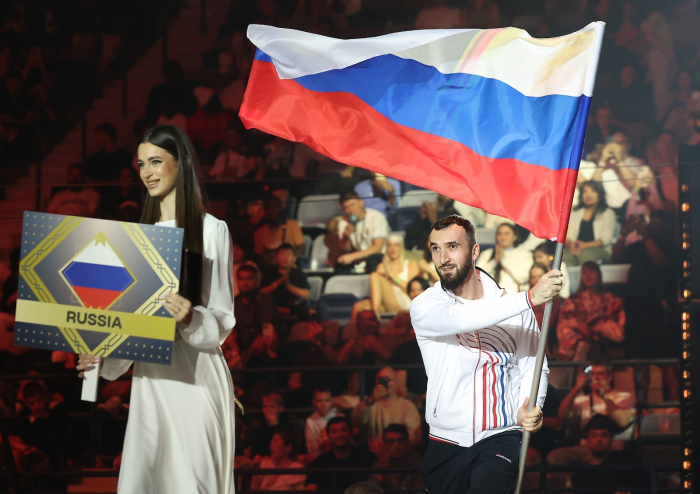
The International Boxing Association (IBA) has released an official statement from its President, Umar Kremlev, following the International Olympic Committee’s (IOC) decision to lift restrictions on youth athletes holding Russian and Belarusian passports.
The reversal was announced after the 14th Olympic Summit at Olympic House in Lausanne, where global sports leaders reaffirmed that young athletes must retain access to international competition free from political influence. The Summit also addressed the IOC’s “Fit for the Future” consultation, developments in upcoming Olympic events, and the need to preserve political neutrality in global sport.
Kremlev: “The IOC had no other choice but to reverse their previous decision.”
Reacting to the ruling, Kremlev emphasized the IBA’s long-standing belief that athletes should never be penalized for political conflict or geopolitical disputes.
“The IOC exists to protect the interests of athletes, which includes allowing them to represent their country under their own flag and anthem,” Kremlev said. “For athletes, their anthem and flag are their heart and soul. This is what they compete for at international events.”
He added that the earlier restrictions on national symbols were misguided from the start:
“Athletes – not politics – must always stand on the podium. They had no other choice but to reverse their previous silly decision.”
Kremlev noted that removing flags and anthems from athletes “made no sense from the very beginning,” and that the IOC’s latest shift signals recognition of this.
Key points from the IOC’s decision
Olympic leaders agreed that youth athletes from Russia and Belarus should no longer face limits on participation in international youth events—both team and individual—so long as they follow the respective International Federation rules. However, some restrictions remain in place for senior-level competition.
Main takeaways include:
- Youth athletes should not be held responsible for the actions or policies of their governments.
- Flags, anthems, and national uniforms may be used when a country’s national federation is in good standing.
- Sanctions and restrictions on senior events and on Russian and Belarusian government officials remain unchanged.
IBA highlights its own model of political neutrality
Kremlev pointed to the IBA as an example of what politically neutral sport should look like: fully inclusive, respectful of national identity, and centered on the athlete.
“IBA demonstrates how sport can remain free from politics. All international sports organizations should follow this example.”
He referenced the ongoing IBA Men’s World Boxing Championships in Dubai, where more than 500 athletes from 118 nations are competing proudly under their flags and anthems—an approach he believes the Olympic Movement should adopt universally.
IBA’s athlete-first position
The International Boxing Association has repeatedly advocated for keeping politics out of sport and ensuring all eligible athletes can compete without discrimination. The organization maintains that unity, fairness, and integrity in sport depend on keeping athletes—especially youth—free from geopolitical consequences.

Roberto Villa is the CEO, Founder, Executive Writer, and Senior Editor of FightBook MMA. Has a passion for Combat Sports and is also a podcast host for Sitting Ringside. He’s also a former MMA fighter and Kickboxer. He’s also the main photographer for the 4CornersMafia Car Club.