
Colby Covington Dismisses Ian Machado Garry’s UFC 303 Performance as a Loss
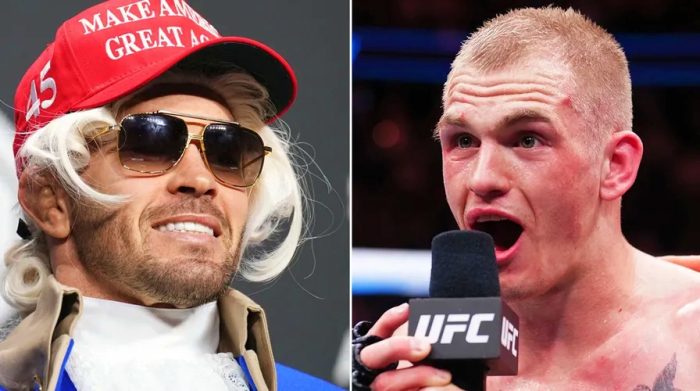
In the aftermath of UFC 303, the MMA community finds itself embroiled in yet another contentious debate. Ireland’s Ian Machado Garry remains unbeaten, extending his record to an impressive 15-0 in MMA and 8-0 in the UFC, after a grappling-heavy unanimous decision victory over Michael Page. Despite the win, Garry’s performance has drawn criticism from none other than the outspoken Colby Covington, who minced no words in dissecting Garry’s showing.
Garry’s victory revealed a strategic pivot, relying largely on his grappling skills to neutralize Page’s striking prowess. Early in the bout, Garry threatened a rear-naked choke, setting the tone for what many expected to be a dominant performance. While he comfortably secured the first round, Page’s striking resurgence in the second round breathed life back into the contest. The third round, a tight affair with both fighters demonstrating periods of dominance on the ground, ultimately saw Garry eke out the win on the judges’ scorecards.
However, Covington was not impressed. Fueling the narrative that Garry has yet to face truly elite competition, Covington derided him for fighting “cans from the Indian casino leagues.” In an interview with Submission Radio, he went so far as to suggest that even Dana White himself thought the fight should have been scored a draw. Covington’s remarks underscore a simmering tension in the welterweight division and hint at the unspoken truth of the sport: a record alone does not equate to legitimacy in the eyes of peers.
Covington’s harsh critique goes beyond the performance. He accused Garry of manipulating the system to ride on the coattails of Conor McGregor’s star power, only to end up as a mere afterthought in the UFC’s larger narrative. This criticism reached its zenith when Covington mocked Garry for failing to secure a co-main event slot at UFC 303 despite multiple cancellations, pointing to what he perceives as the UFC’s lack of faith in Garry as a marquee fighter.
This back-and-forth is emblematic of the broader dynamics of the MMA industry, where public perception can be as crucial as in-cage performance. Garry’s win, while maintaining his undefeated record, did little to silence critics who doubt the substance behind the hype. Covington’s vocal dismissals amplify this skepticism, positioning Garry in a precarious spot where every subsequent fight becomes a referendum on his worthiness as a contender.
For Garry, the path forward is clear yet fraught with peril. To cement his status, he must transition from defeating “the No. 14 guy in the world” to facing—and convincingly beating—those entrenched in the top tiers of the division. Only then can he solidify his place and quiet detractors like Covington.
On a broader scale, the incident underscores how rivalries and narratives outside the cage can ignite fan engagement and shape fighter legacies. The interaction between Covington and Garry has the potential to spark a high-stakes bout that not only boosts pay-per-view numbers but also clarifies the welterweight rankings. For Dana White and the UFC, leveraging these storylines is more than just promoting fights; it’s about crafting the ever-evolving mythology of the sport.
As the MMA world awaits Garry’s next move, one thing is certain: the young Irishman is now under the microscope. Each grapple, strike, and stare-down will be analyzed, setting the stage for what could be his most defining year yet. Whether he rises to meet Covington’s challenge or falters under the bright lights will be a narrative threaded with tension, drama, and the unyielding pursuit of greatness.
